We are SMFG India Home Finance Co. Ltd.

 Login
Login
Minimum CIBIL Score for Home Loans: Requirements & Tips
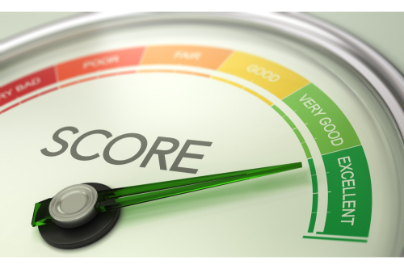
There is no minimum CIBIL score for home loans. However, as home loans are big-ticket loans with very long repayment tenure, usually ranging more than 10 years, lenders prefer borrowers with a CIBIL score of 700 and above to even consider an applicant. Individuals with a higher CIBIL score are considered to be financially disciplined, creditworthy, and the risk of default is lower. Applicants who have a CIBIL score higher than 800 can probably even get very good terms, depending on other eligibility factors.
Let’s see how.
-What is CIBIL Score
CIBIL score is a three-digit number that indicates your creditworthiness based on your past credit behavior. The score ranges between 300 to 900. A score lower than 700 is considered poor among most lenders, indicating a lack of appropriate credit behavior. In such cases, the risk of default is highest and the loan account may turn bad. Whereas, a score closer to 900 indicates maximum creditworthiness.
The score is primarily calculated based on the past loan repayments, loan tenure, number of loan accounts, credit utilization ratio, etc of the individual.
Why is a CIBIL Score Important for a Home Loan?
A CIBIL score holds significant weight in the home loan approval process, serving as a crucial indicator of your creditworthiness. Financial institutions use this three-digit score to assess the risk associated with lending you a home loan. A higher CIBIL score, typically 700 or more, enhances your chances of approval, indicating a strong history of responsible credit management. At the same time, a lower score can result in a higher risk perception, potentially leading to a rejection of your home loan application. Maintaining a good CIBIL score is key to securing favorable terms and realizing your dream of homeownership.
CIBIL Score Ranges
The following table showcases different CIBIL Score ranges and what it means in terms of creditworthiness:
| Range | Creditworthiness | Chances of Loan Approval |
|---|---|---|
| Below 600 | Poor | Loan application unlikely to be approved |
| Between 600-649 | Doubtful | Most lenders will reject home loan application |
| Between 650-699 | Satisfactory | Few lenders (not Grihashakti) may approve, but may offer less favorable terms like very high interest rates |
| Between 700-749 | Good | Good chances of loan application approval |
| 750 and above | Excellent | Very high chances of loan application approval with easier terms |
Please note that at Grihashakti, we accept home loan applications only from those who fulfil all our eligibility criteria, one of which is a CIBIL score of 700 or more.
Minimum CIBIL Score Required for Home Loan
The required CIBIL score for home loan differs from lender to lender, which you need to confirm with the lender before applying for a home loan. It is the primary determiner for your home loan eligibility.
A score of 700 and above is desirable, as the chances of home loan approval are highest with favorable terms. In case, if you have a slightly lower CIBIL score, you can improve the chances of loan approval by adding a co-applicant to the home loan application and making higher down payments. This helps to spread out the risk, and for lenders, it becomes easier to approve the loan.
You should note, it is always better to apply for a home loan with a good credit score, as you get to access more benefits, including
- Eligible for higher loan amounts
- Easier terms and conditions on loan repayment
- Competitive home loan interest rates , resulting in reduced costs
- Reduced documentation and verification process
- Quicker approval for home loan application
Must Read : How Your Credit Score Can Impact Your Home Loan?
How is CIBIL Score Used for Home Loans?
Your CIBIL score is a pivotal factor in determining your eligibility and terms for a home loan. Explore how financial institutions, such as SMFG Grihashakti, leverage your CIBIL score for informed decisions in the home loan approval process
Loan Eligibility Assessment: Financial institutions assess your eligibility based on your CIBIL score. A higher score, like 700 or above, significantly improves your chances of home loan approval, signaling responsible credit management.
Determining Interest Rates: Your CIBIL score influences the interest rate offered. A good score enhances your approval chances and qualifies you for more attractive interest rates.
Loan Amount and Terms: The CIBIL score plays a role in deciding the loan amount and terms. A high score can result in a larger loan amount and more favorable terms, such as a longer repayment tenure.
Faster Processing: A good CIBIL score expedites the loan approval process. If you satisfy the eligibility criteria along with having a good CIBIL score, financial institutions like SMFG Grihashakti provide quick provisional sanctions, reducing the time required for home loan approval.
Maintaining a good CIBIL score not only increases approval chances but also opens doors to more favorable loan terms. With SMFG Grihashakti Home Loans minimal documentation, and competitive rates, turning your homeownership dream into reality becomes an achievable goal.
Tips to Improve CIBIL Score for a Home Loan
Having a low credit score impacts your ability to get a loan when required and also restricts you from the availing benefits that are offered by the lenders.
If you have a low CIBIL score, you can consider the following tips to improve your CIBIL score:
Ensure Timely Repayment of your Loan:
In CIBIL score, credit repayments history has almost 35% weightage. Therefore, you need to ensure you make timely EMI payments to continue improving the CIBIL score. Default or late payment of EMI hugely impacts your credit score and it takes months of consistent effort to reverse the impact. Also, it is recommended to always pay your EMIs (including credit card bills) in full. Paying a partial amount or only the minimum amount due will cause interest to accrue on the remaining amount, which would, in turn, cause your credit score to drop.
Lower credit utilization ratio:
The credit utilization ratio has a 30% weightage in the CIBIL score. It refers to the total credit availed against the sanctioned limit. This is mostly calculated against your credit card balances and outstanding loan balances. A higher credit utilization ratio indicates you are highly dependent on credit to meet your short term expenses and is considered a bad sign by the lenders in terms of financial discipline.
Duration of loan:
It has almost 15% weightage in the CIBIL score. It refers to repayment duration and whether timely repayment has been made during the period. If you have availed of a loan for a long duration, and have paid off within the due date without missing out on any repayment date, it positively impacts your credit score.
Frequency of applying for a new loan:
It contributes up to 15% to the CIBIL score. The CIBIL score takes into account how frequently you have applied for a new loan and the rate of approval by the lender. For example, if you have applied for a loan with multiple lenders in a short duration, your credit report will have too multiple credit inquiries. It is not a good practice as multiple credit inquiries in a short duration indicates you are a credit hungry individual and negatively impacts your credit score.
Does CIBIL Score Affect Home Loan Eligibility
To summarize in the simplest way possible, Yes! CIBIL score plays a huge role in determining whether you are eligible for a home loan or not. Lenders keep an eye on your CIBIL score to understand and intercept the criteria of home loan eligibility of an individual.
Having a CIBIL score of 700 or above means you have excellent chances of approval. Additionally, there is a high chance that your loan will be approved. However, on the contrary, a low CIBIL score could significantly downgrade your chances of getting a home loan.
So, what are the steps that you can take to polish your CIBIL score?
- Start with paying your bills that are due on time. You should never miss your monthly EMIs nor should you delay your credit card monthly bill payments. To make this process better, setting up monthly reminders for your payments is a good idea, to begin with.
- Keep a frequent check on your credit card limit. Reach out to your bank or financial institution for increasing your credit card limit which will eventually help you in keeping your limit restricted. If the credit card utilization ratio is low, it will automatically improve your credit score.
- Keeping a tab on your credit report is another easy way to stay in touch with your CIBIL score. Knowing your credit card will help in eliminating the incorrect details from being tracked on the report.
Keeping all these factors in mind is the only way to maintain a healthy credit balance and count as eligible to take a credit score. Maintaining a CIBIL score that will yield you benefit in the long run at least to secure a home loan is extremely crucial.
Can I get a Home Loan with Low CIBIL Score?
Nothing is impossible, so is getting a loan if you have a low CIBIL score. However, keep yourself prepared for the tussle you are about to approach. Lenders entirely depend on CIBIL score as it mentions your repayment capacity. When you have a lower score, the chances of being at risk are higher.
The best solution in such a case is to have a backup option when you reach out to a lender for the loan requirement. It might be possible that they don’t have the required loan ask, and based on the same, they can’t process the loan amount.
Another turnaround in such a situation is to change your financial habits and boost your credit score.
Here are some of the benefits of having a good CIBIL score:
- You have more power to negotiate based on your excellent CIBIL number.
- Loan processing is smooth.
- Home Loan Interest rates are normal.
- Chances are higher of getting a home loan.
A low CIBIL score leaves an impact on a lot of things. When you are planning to get a loan for buying a house or a car, you should plan to maintain a powerful CIBIL score. That’s the right way to head towards your end goal.
Conclusion
Very few lenders may consider home loan applications where the CIBIL score is between 600-700, and so, it is better to improve and better your credit score above 700 first before applying for a home loan.
It helps you to get a better deal on your home loan and gives you a smooth home buying experience.
Must Read : Home Loan with Low CIBIL Score
FAQ's
Low CIBIL scores mean that you may still apply for the home loan but the interest rates will be higher. Also, extremely low scores might impact your chances of getting the loan approved.
At 600, your creditworthiness is doubtful and there are high chances that the lending institution will reject your application for a housing loan.
At 650, your creditworthiness is satisfactory but with SMFG Grihashakti, you will need a higher score. With this score, your application might stand a chance of approval but at the cost of high interest rates.
Yes, 720 is a good CIBIL score. You can get a home loan under SMFG Grihashakti with this score with strong chances of home loan application approval and reasonable terms like interest rate, tenure, and loan amount.
Yes. You can get a house loan if you are in the CIBIL defaulter’s list, because many lending institutions consider factors like higher income, high property value, good credit score of a co-applicant, etc.. However, you might not have the flexibility to choose certain elements and the lending firm might charge you very high rates of interest.
No. No lending institution can grant a home loan without the borrower’s CIBIL score, as instructed by the RBI.